

Perimenopause Is a Whole-Body Experience. Your Training
Should Be Too.
Gain the integrative knowledge and practical training to guide women through one of the most significant health transitions of their lives.
In the U.S., about 2 million women enter perimenopause and 1.3 million women enter menopause every year, and roughly 90% of women 35+ experience perimenopause-related symptoms—yet most navigate this transition without adequate guidance. AFPA’s Perimenopause Whole-Health Specialist Certificate prepares you to fill that gap with whole-health support that addresses root connections, not just surface symptoms.
With the AFPA Perimenopause Whole-Health Specialist Certificate, you will:
- Understand how hormones, metabolism, nutrition, movement, sleep, stress, and identity connect, and how each shapes your clients’ experience.
- Learn how physiology, nutrition, exercise, and behavior change interact, and how to address them together.
- Attract and retain midlife clients with confidence and demonstrated expertise.
- Differentiate your practice in nutrition, fitness, or health coaching with a specialized certificate.
- Build a referral-worthy reputation as the practitioner who truly understands midlife health.

Multidisciplinary Faculty You Can Trust
Taught by medical and physical therapy doctors, registered dietitians, PhDs, an exercise scientist, and board-certified health coaches

Built for Real Client Work
Client scenarios, coaching frameworks, and referral guidance throughout

Whole-Health Curriculum
32 modules and 16+ hours of video across physiology, nutrition, fitness, and behavior change

Flexible & Fast
100% online, self-paced, complete in under 6 months

The Advantage of Becoming a Perimenopause Whole-Health Specialist
Women in midlife are underserved, dismissed, and often told their symptoms are just part of aging. They deserve better—and they’re actively looking for professionals who can help. As a Perimenopause Whole-Health Specialist, you’ll have the tools, the knowledge, and the confidence to be the practitioner they’ve been searching for.
Your advantage:
- A specialized certificate in a fast-growing, underserved segment of women’s health—approximately 2 million U.S. women enter perimenopause every year.
- A whole-health lens that connects hormones, nutrition, movement, sleep, stress, and identity, which is rare in single-lens perimenopause trainings.
- Practical frameworks that translate directly to client work, so you know exactly how to lead your midlife clients through this transition.
- Clear referral confidence: You’ll learn to recognize when a client needs a pelvic floor PT, registered dietitian, mental health professional, or physician, and how to facilitate an effective referral.
See How It All Connects and Change How You Practice
Perimenopause affects nearly every system in the body. This certificate is built to match that complexity, weaving physiology, nutrition, strength and metabolic training, gut health, sleep, behavior change, and midlife identity into one integrative framework: AFPA’s signature holistic depth, now applied to women’s midlife health.
Across seven sections, you’ll learn how to:
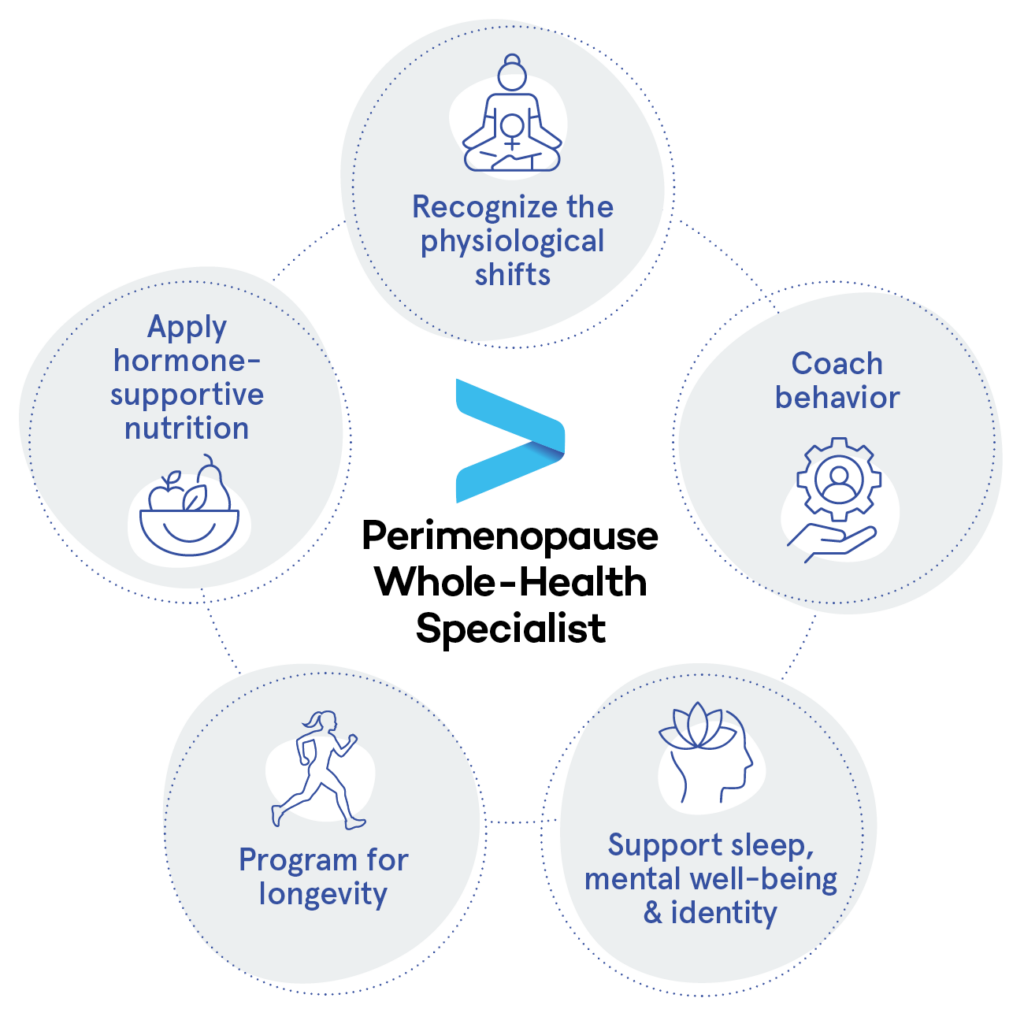
- Recognize the physiological shifts of perimenopause, from cardiometabolic, bone, and muscle health to brain, gut, and skin changes.
- Apply hormone-supportive nutrition and evaluate supplements, diet trends, and weight-loss medications with an evidence-based lens.
- Program movement for longevity: Resistance training, HIIT, SIT, pelvic health, and fueling around exercise.
- Support sleep, mental well-being, and identity through one of the most significant transitions of a woman’s life.
- Coach behavior change using motivational interviewing, behavior change science, and culturally competent practice, always within your professional scope.
What Your Certificate Enrollment Includes
This online certificate program gives you the knowledge, core skills, confidence, and tools you need to support women through perimenopause, menopause, and beyond so you can apply what you learn with your clients from day one.
- Access to the online learning platform
- 32 modules across seven sections
- 41 video lectures totaling over 16 hours of on-demand instruction
- Interactive client scenarios woven throughout the program
- 44 supplementary handouts to use for reference and in client sessions
- 41 video slide handouts and 41 video transcripts for study and review
- Check-your-understanding questions and key terms throughout
- Section quizzes, a study guide, and an online final exam
- Coaching frameworks and referral guidance for real-world application with midlife clients


A Certificate You Can Stand Behind
When you graduate, you’ll receive your AFPA Perimenopause Whole-Health Specialist Certificate through Accredible. It’s proof of your specialized training and a certificate you can share with prospective employers and clients.

What Can I Expect From the Course?
- 100% Online Course: No textbooks or other materials required
- Self-Study: Work through the program when it’s convenient for you
- Complete in Less than 6 Months: Many learners finish much faster
- Instant Access: Get immediate access to your online learning platform once you complete your purchase
- Online Final Exam: Take your multiple choice, open-note final exam from home
- Earn Your Perimenopause Whole-Health Specialist Certificate from AFPA
This Program is For…

Health and wellness coaches, NBC-HWC certified or not, who want to attract, retain, and better support midlife clients

Registered dietitians and nutrition coaches who want integrative training in the nutritional and lifestyle dimensions of midlife health

Personal trainers and fitness professionals working with women 40+ who want the knowledge and frameworks to serve this growing population

Nurses, allied health professionals, and women experiencing perimenopause who want a deeper, evidence-based understanding of midlife health
A Look Inside the Curriculum
This 32-module certificate empowers you to guide women through perimenopause, menopause, and postmenopause with a whole-person approach. You’ll move from foundational physiology through midlife body-system shifts, nutrition and lifestyle strategies, movement for longevity, sleep and well-being, and the coaching skills to put it all into practice, learning how each system connects and why that matters for your clients.
Section 1: Foundations Answer
Module 1: Perimenopause, Menopause, and Postmenopause Overview
- Distinguish between perimenopause, menopause, and postmenopause by describing the defining characteristics of each phase.
- Explain how declining estrogen levels during perimenopause affect multiple body systems.
- Identify factors that influence the timing of perimenopause and menopause onset, including lifestyle, genetics, and racial/ethnic background.
- Explain the long-term health risks associated with postmenopause and their implications for coaching.
Module 2: Key Hormones
- Explain how hormonal feedback loops regulate hormone production throughout the body.
- Describe the functions of reproductive, metabolic, and appetite hormones.
- Distinguish between acute and chronic cortisol elevation to explain why cortisol is not a direct cause of weight gain.
- Discuss the appropriate use and contraindications of menopausal hormone therapy (MHT).
Module 3: Common Symptoms & Individual Variation
- Explain how vasomotor symptoms arise and why they represent a significant cardiovascular risk factor for perimenopausal women.
- Describe how declining estrogen contributes to changes in body composition, musculoskeletal health, and cognitive function.
- Identify evidence-based lifestyle and dietary strategies that may reduce the frequency or severity of perimenopause symptoms.
- Recognize signs of mental health vulnerability and disordered eating during the menopause transition.
Module 4: Perimenopause Misconceptions and Hot Topics
- Distinguish between body composition changes caused by aging versus those caused by hormonal shifts during perimenopause.
- Explain why food cannot restore ovarian hormone function during menopause, despite common claims to the contrary.
- Identify practical lifestyle and sleep hygiene strategies that address common sleep disruptions during perimenopause.
- Describe the potential for renewed well-being and personal growth during and after the menopause transition.
Section 2: Midlife Physiological Shifts—From Chronic Disease Risks to Quality-of-Life Changes Answer
Module 5: Obesity, Body Composition, and Health Risks
- Distinguish between body composition changes attributable to aging and those associated specifically with the menopause transition.
- Explain how BMI and waist circumference work together to assess health risk.
- Identify the chronic health conditions associated with obesity and visceral fat accumulation during the menopause transition.
- Apply current physical activity guidelines to coaching strategies that preserve muscle mass and limit midlife weight gain.
Module 6: Cardiometabolic Health
- Explain how declining estrogen contributes to the development of metabolic syndrome during the perimenopause transition.
- Recognize reference thresholds for fasting blood glucose and key lipid values and their relationship to cardiometabolic risk.
- Discuss how insulin resistance progresses to pre-diabetes and type 2 diabetes, and identify the role visceral fat plays in that progression.
- Describe why vasomotor symptoms are considered a female-specific cardiovascular risk factor.
Module 7: Bone Health
- Describe how bone mass changes across the life cycle and how estrogen decline accelerates bone loss during perimenopause.
- Distinguish between osteopenia and osteoporosis.
- Identify the key nutrients that support bone health in perimenopausal women.
- Apply physical activity guidelines for bone health to coaching perimenopausal clients.
Module 8: Muscle Health
- Explain the role of skeletal muscle in metabolic health.
- Define sarcopenia and sarcopenic obesity.
- Identify the nutritional factors that support muscle building in perimenopausal women.
- Describe evidence-based strategies for managing musculoskeletal pain during perimenopause.
Module 9: Brain Function and Mental Health
- Describe how estrogen decline affects brain function and cognitive health during midlife.
- Identify the key nutrients that support brain health in perimenopausal women.
- Explain the relationship between chronic stress, cortisol, and mental health.
- Recognize signs of disordered eating and describe the coach’s role in addressing them.
Module 10: Gut Health
- Discuss the role of the estrobolome in estrogen metabolism and its potential impact on perimenopausal symptoms.
- Describe how short-chain fatty acids protect the gut barrier and reduce colorectal cancer risk.
- Distinguish between soluble and insoluble fiber, including their food sources and health benefits.
- Explain the gut-brain connection through the vagus nerve and enteric nervous system.
Module 11: Hair, Skin, and Nail Health
- Describe how estrogen decline affects skin collagen, hydration, and cell turnover during perimenopause.
- Identify the key nutrients that support skin, hair, and nail health during the perimenopause transition.
- Discuss safety concerns associated with supplements marketed for hair, skin, and nails.
Section 3: Holistic Nutrition and Lifestyle Strategies Answer
Module 12: Weight Management and Mindset
- Explain the four components that make up Total Daily Energy Expenditure (TDEE) and how each can be influenced.
- Describe the role of protein in supporting fat loss and muscle preservation in perimenopausal women.
- Distinguish between the direct and indirect effects of hormonal changes on midlife weight management.
- Apply appropriate coaching responses to common mindset barriers in weight management.
Module 13: Weight Loss Medications and Other Peptides
- Explain how GLP-1 medications mimic natural gut hormones to reduce hunger and food noise.
- Distinguish between various GLP-1 products by regulatory status and safety evidence.
- Identify the populations for whom GLP-1 medications are contraindicated.
- Describe the nutritional risks associated with significantly reduced food intake during GLP-1 treatment.
- Apply evidence-based coaching strategies to support perimenopausal clients using weight loss medications.
Module 14: Establishing a Nourishing Eating Pattern
- Identify the three macronutrients, their caloric contributions per gram, and their primary roles in the body.
- Explain how fiber, protein, and meal timing each support weight management and symptom relief in perimenopausal women.
- Distinguish between nutrient-dense and ultra-processed foods and their relative impact on health.
- Apply coaching strategies to support balanced eating patterns.
Module 15: Nutrition Trends and Diet Myths
- Identify the types of intermittent fasting and the components of the ketogenic diet.
- Explain how intermittent fasting and the ketogenic diet function to reduce weight.
- Distinguish between health claims and clinical evidence for common diet trends.
- Select appropriate coaching responses when perimenopausal clients want to try popular diet trends.
Module 16: Supplements and Complementary Botanicals
- Identify the six ingredient categories recognized under federal law that qualify a product as a dietary supplement.
- Explain why perimenopausal women may require vitamin and mineral supplementation.
- Distinguish between evidence-based supplements and those with limited or emerging clinical support for perimenopausal women.
- Apply appropriate coaching responses when clients raise questions about supplement use or potential medication interactions.
Section 4: Movement and Exercise for Longevity Answer
Module 17: Exercise Strategies for Optimal Health
- Identify the five body systems most affected by estrogen decline and the role exercise plays in each.
- Distinguish between the six layers of influence that affect how a perimenopausal client responds to exercise.
- Evaluate the appropriateness of different exercise modalities for a perimenopausal client based on her symptom profile and recovery capacity.
Module 18: High-Intensity Interval Training (HIIT)
- Describe what HIIT is and how it differs from other forms of interval training.
- Explain how HIIT supports cardiovascular health, blood sugar regulation, body composition, mood, and brain function during perimenopause.
- Identify the signs of overtraining and identify the appropriate programming response.
- Recognize the structure of a complete HIIT session, including effort level, rest periods, warm-up, and cool-down.
Module 19: Sprint Interval Training (SIT)
- Distinguish sprint interval training (SIT) from high-intensity interval training (HIIT).
- Identify which clients are appropriate candidates for SIT based on readiness criteria.
- Recognize signs that a client’s SIT load is exceeding her recovery capacity.
- Understand the structure of a complete SIT session.
Module 20: Resistance and Strength Training
- Explain what resistance training is and how progressive overload drives adaptation.
- Describe why resistance training is important for perimenopausal clients across multiple areas of health.
- Structure a resistance training program using appropriate frequency, intensity, volume, and session organization.
- Select a training split based on a client’s schedule, training age, and readiness.
- Recognize common programming mistakes and identify appropriate adjustments.
Module 21: Exercise Myths and Trends
- Explain why common exercise myths are particularly counterproductive for perimenopausal women.
- Evaluate current fitness trends for relevance and appropriate application.
- Select coaching language that corrects misconceptions without creating client resistance.
- Recognize when a client’s relationship with exercise warrants referral to a mental health professional.
Module 22: Pelvic Health
- Explain how declining estrogen during perimenopause changes pelvic floor tissue, continence, and organ support.
- Apply breath-based coaching cues that support pelvic floor function during resistance training.
- Recognize client signs and symptoms that indicate referral to a pelvic floor physical therapist.
Module 23: Fueling Around Exercise
- Discuss the importance of nutrient timing and when it may be appropriate for clients.
- Describe nutrient timing strategies and what to eat before, during, and after exercise.
- Define body recomposition and recognize when client support requires referral to a registered dietitian.
Section 5: Sleep and Midlife Well-Being Answer
Module 24: Sleep and Recovery
- Describe the different stages of sleep.
- Identify common causes of sleep disruption during perimenopause and their effects on the body.
- Apply evidence-based sleep hygiene strategies.
- Recognize when a client’s sleep concerns warrant referral to a specialist.
Module 25: Mental Well-Being and Self-Care
- Identify common symptoms of anxiety and depression in midlife women.
- Describe self-care and identify practical strategies clients can incorporate into daily life.
- Recognize when a client requires professional mental health support.
Module 26: Navigating Roles, Identity, and Midlife Challenges
- Identify how a client’s parenting stage and caregiving responsibilities can affect their wellness program.
- Recognize common chronic conditions in midlife clients and understand how they shape coaching needs.
- Apply coaching strategies that accommodate time constraints, physical limitations, and competing responsibilities.
- Describe resources available to clients for community connection, professional referral, and additional support.
Module 27: A Rite of Passage—The Power of Perimenopause
- Describe perimenopause as a life stage transition with physiological, cultural, and identity dimensions.
- Identify three principles of sovereignty and explain how each applies in a coaching conversation.
- Apply coaching strategies that support clients through the experience of midlife transition.
Section 6: Integration of Holistic Health Coaching Answer
Module 28: Behavior Change Science
- Define health behavior and identify the factors that precede behavior change.
- Describe the transtheoretical model and self-determination theory.
- Apply social cognitive theory concepts to support clients during perimenopause.
- Construct a behavioral goal using the SMART framework.
Module 29: Motivational Interviewing
- Explain what motivational interviewing is and how it supports coaching in perimenopause.
- Demonstrate the four OARS skills to keep a session focused on the client.
- Distinguish between change talk and sustain talk in client statements.
- Apply evocative questions and scaling questions to help a client move toward change.
Module 30: Behavior Change Techniques and Applications in Real Life
- Summarize the components of a wellness vision and its role in sustaining client motivation.
- Distinguish between habit stacking and temptation bundling as strategies for building new behaviors.
- Construct a SMART goal from a vague health intention.
- Apply environmental restructuring principles to reduce friction around a target behavior.
Module 31: Cultural Competency
- Explain how cultural context shapes a client’s experience of perimenopause symptoms.
- Distinguish between an educated generalization and a stereotype in coaching practice.
- Apply open-ended questions and reflective listening to explore a client’s cultural context.
- Identify how cultural narratives affect a client’s motivation, self-efficacy, and willingness to seek support.
Section 7: Wrap Up Answer
Module 32: Preparing for the Final Exam
- Key Terms
- Study Guide
- Final Exam
Learn From Experts Across Medicine, Nutrition, Fitness, and Health Coaching
Your instructors bring a breadth of cross-disciplinary expertise that rarely exists in a single course: Medical and physical therapy doctors, registered dietitians, PhDs, an exercise scientist, and board-certified health coaches. This integrative faculty is exactly why this program produces a different kind of practitioner—one who understands how systems connect and why that matters.

Elizabeth Ward
MS, RDN
Elizabeth Ward is a writer and nutrition consultant. She is the co-author of The Menopause Diet Plan, A Natural Guide for Managing Hormones, Health, and Happiness, as well as Expect the Best, Your Guide to Healthy Eating Before, During, and After Pregnancy, and The Complete Idiot’s Guide to Feeding Your Baby, and she regularly writes for WebMD and other publications. For 15 years, Ward counseled patients at the Joslin Diabetes Center, Harvard Vanguard Medical Associates, and Salem Hospital.
Ward completed her undergraduate degree in human nutrition at the University of Massachusetts, Amherst, a one-year dietetic internship at Brigham and Women’s Hospital in Boston, and a master’s degree in mass communication at Boston University. She is the recipient of the 125 Alumni to Watch Award from the University of Massachusetts and the Media Excellence Award from the Academy of Nutrition and Dietetics. Ward was also named Recognized Young Dietitian of the Year by the Massachusetts Academy of Nutrition and Dietetics.

Dr. Doriana Parkin
MD, CCFP
Dr. Doriana Parkin is the founder and CEO of Smplyfit Wellness, a weight loss and lifestyle coaching practice dedicated to helping busy women take back control of their health. A licensed physician with an MD and CCFP designation from the College of Family Physicians of Canada, she also holds an Advanced Obesity Management Program (AOMP) certification and is Calibre-certified. As a working mother of three, Dr. Parkin understands firsthand the challenge of juggling work, family, and personal well-being. She brings empathy and authenticity to her work, rooted in her own journey of overcoming weight and body image struggles as a teenager. Drawing on 15 years of clinical family practice, she offers a grounded, evidence-informed perspective on nutrition, fitness, and sustainable lifestyle change. In all her work, she focuses on empowering women to make confident food choices and seamlessly incorporate fitness and self-care into their daily lives, reflecting her deep commitment to practical, compassionate support for those navigating the demands of a full and busy life.

Shana Walsh
PhD, NBC-HWC, MCHES
Shana Walsh is the Director of Education and Curriculum at AFPA. With a PhD in Kinesiology, Exercise Nutrition, and Health Promotion, she has served as an educator, author, and researcher. She is also a National Board Certified Health and Wellness Coach, Master Certified Health Education Specialist, and Certified Personal Trainer. In training, coaching, and researching, Shana focuses on the why behind health-related decisions, seeking an understanding of the factors that influence individual behavior. She knows that when people improve their health, they improve their life. She is committed to supporting others to take steps toward positive change.

Noel Chan
PhD, NBC-HWC
Noel Chan is a National Board Certified Health and Wellness Coach, educator, and mentor with a passion for training and empowering the next generation of coaches. She brings a unique blend of scientific rigor and holistic care, holding a BS in biological sciences from Cornell University, a PhD in pharmacology from Weill Cornell Graduate School of Medical Sciences, and a Postdoctoral Fellowship in integrative medicine at Harvard Medical School. She also completed advanced training in Positive Psychology Health and Wellness Coaching at the College of Executive Coaching.
With a background that bridges medical research and integrative health, Noel supports individuals and fellow coaches in navigating life transitions, grief, and health and wellness journeys—one meaningful shift at a time. As an instructor, she is dedicated to cultivating confident, compassionate coaches who are prepared to make a lasting impact in the lives of others.

Amber Peterson
NBC-HWC
Amber Peterson is a National Board Certified Health and Wellness Coach with specialized training in functional medicine, mindful eating, and nervous system regulation. With over ten years in the digital health industry, she has a strong background in designing and developing impactful coach certification programs as well as corporate health challenges. Amber is passionate about empowering individuals to reach their fullest potential and has served as a catalyst for transformative change in the lives of thousands.

Kellie Lunday
MS, RD, LD, NBC-HWC
Kellie Lunday is a registered dietitian with nearly a decade of experience in corporate wellness, health education, and performance optimization. She received her MS in nutrition from Texas Woman’s University and completed her dietetic internship at The University of Texas in Austin. Kellie currently serves as the Nutrition Content Lead for AFPA. Previously, she has worked in various roles at Exos and the University of Texas at Austin. She is passionate about travel, global cuisines, fitness, and advancing consumer health through evidence-based education.

Tiffany Grimm Fulton
BS, RYT500, CPT, XPS
Tiffany Grimm Fulton is a professional coach, speaker, and bestselling author of Power in the Pause with a background in sports medicine and over a decade of senior leadership experience at Exos, where she designed and led programs for managers, specialists, Fortune 100 leaders, and professional athletes. A certified executive coach, she specializes in translating the science of the body’s natural cycles and rhythms into practical frameworks for everyday intentionality, drawing on more than 20 years of training in human performance and living wisdom traditions across 30+ countries. She is a world traveler, expedition leader, and culture enthusiast who continues to mentor leaders, professionals, and individuals to become the next best version of themselves.
Jill Stephenson
PT, DPT
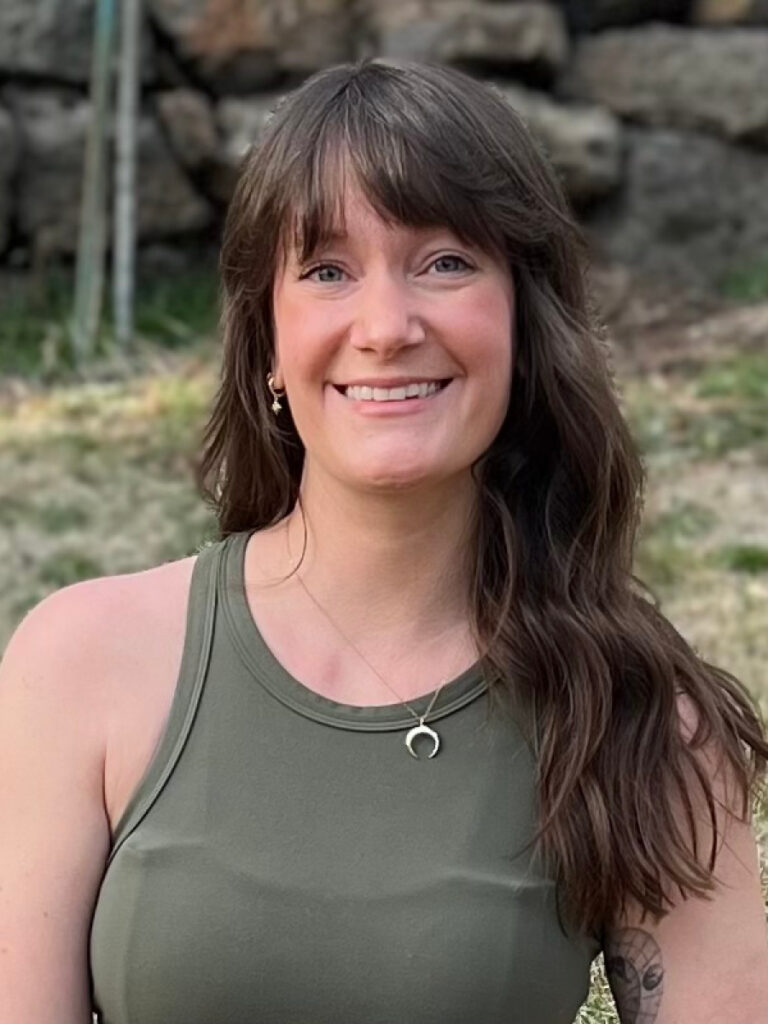
Jill Stephenson received her Doctorate of Physical Therapy in 2016 from the University of Colorado Anschutz Medical Campus after finishing her Bachelor of Science in Exercise and Sports Science from Texas State University in 2013. Based in Austin, Texas, Jill specializes in pelvic health and treating individuals with hypermobility and Ehlers-Danlos syndrome. Her intuitive manual skills and orthopedic background allow her to look past surface level symptoms and get to the root of dysfunction. Jill is passionate about education both in clinic, where she loves helping patients understand their own bodies, and in professional settings, where she enjoys sparking those “aha moments” for other clinicians regarding the connections between the nervous, respiratory, and musculoskeletal systems.
Accreditation & Continuing Education
NBHWC Approved Continuing Education Provider
AFPA is recognized by the National Board for Health and Wellness Coaching as an Approved Continuing Education Provider.
This course is approved for 16.5 NASM CEUs.
AFPA Provider Number: CEA-110045-1

NASM Approved Continuing Education Provider
AFPA is recognized by the National Academy of Sports Medicine as an Approved Continuing Education Provider.
This course is approved for 1.9 NASM CEUs.
AFPA Provider Number: 516

AFAA Approved Continuing Education Provider
AFPA is recognized by the Athletics and Fitness Association of America as an Approved Continuing Education Provider.
This course is approved for 1.9 AFAA CEUs.
AFPA Provider Number: 516
FAQ
What are the qualifications to enroll in the Perimenopause Whole-Health Specialist Certificate? Answer
No prior certification or credential is required. To enroll, you must be at least 18 years of age, have a solid understanding of the English language, and have access to a device (computer, tablet, or smartphone) with a reliable internet connection. The program is built for practicing health coaches, dietitians, nutrition coaches, and fitness professionals, and it’s equally open to nurses, allied health professionals, and women who want a deeper, evidence-based understanding of their own midlife health.
How long does it take to complete the certificate course? Answer
This is a self-directed, self-study program structured to be completed in six months or less, and many learners finish faster. Should you need more time, we offer the option to request a six-month extension for a fee of $75.
How soon can I begin this course? Answer
We have open enrollment, so you may enroll whenever you are ready. Shortly after completing your purchase, we will send you an email with information on how to access your online learning portal where you can begin your course right away.
What’s included in the course? Answer
The certificate includes 32 modules across seven sections, 41 video lectures totaling over 16 hours of instruction, 44 supplementary handouts, 41 video slide handouts, and 41 video transcripts. You’ll also work through interactive client scenarios, check-your-understanding questions, key terms, section quizzes, a study guide, and an online final exam.
Are textbooks included in my enrollment fee? Answer
This course is 100% online with no textbooks required.
Who is this certificate designed for? Answer
Health and wellness coaches, registered dietitians, nutrition coaches, personal trainers, fitness professionals, nurses, and allied health professionals working with women 40+. It’s also a strong fit for women experiencing perimenopause who want a deeper, evidence-based understanding of what they’re going through.
Will this certificate allow me to diagnose or treat perimenopause symptoms? Answer
No. This certificate prepares you to educate, coach, and support clients within your existing professional scope of practice. Throughout the program you’ll learn to guide nutrition, movement, sleep, and lifestyle behavior change, and just as importantly, to recognize when a client should be referred to a physician, registered dietitian, pelvic floor physical therapist, or mental health professional. It does not qualify you to diagnose, treat, or prescribe.
How is this different from other perimenopause or menopause courses? Answer
Most perimenopause trainings take a single-lens approach—just nutrition, just exercise, or just body changes. This certificate covers the full picture: 32 modules spanning perimenopause physiology, cardiometabolic, bone, and muscle health, gut health, nutrition and supplements, weight-loss medications, resistance and interval training, pelvic health, sleep, mental well-being, midlife identity, and behavior change coaching. The course is taught by a multidisciplinary faculty spanning medicine, nutrition, exercise science, physical therapy, and health coaching.
Does the course cover GLP-1 and weight loss medications? Answer
Yes. Module 13 covers how GLP-1 medications work, how products differ by regulatory status and safety evidence, who they’re contraindicated for, the nutritional risks of significantly reduced intake, and evidence-based coaching strategies to support clients using them, all within your scope of practice.
Will I have support while I’m taking the course? Answer
Yes. You’ll have access to AFPA’s Education Specialists throughout your studies. If you have questions about course material, learning platform navigation, or need help staying on track, our team is here to support you as you progress.
Are payment plans available for this course? Answer
Yes. Financing through Affirm lets you split your purchase into 3, 6, or 12 monthly payments, as low as $58.25/month. Select Affirm at checkout.
Can I speak with an Enrollment Specialist before signing up? Answer
Please email info@afpafitness.com, call 800.494.7782, or book an appointment below to speak with an Enrollment Specialist.
Flexible Financing with Affirm — As Low As $58.25/Month
Spread the cost of your certificate over 3, 6, or 12 monthly payments with Affirm. Choose the plan that works best for your budget and start learning today.